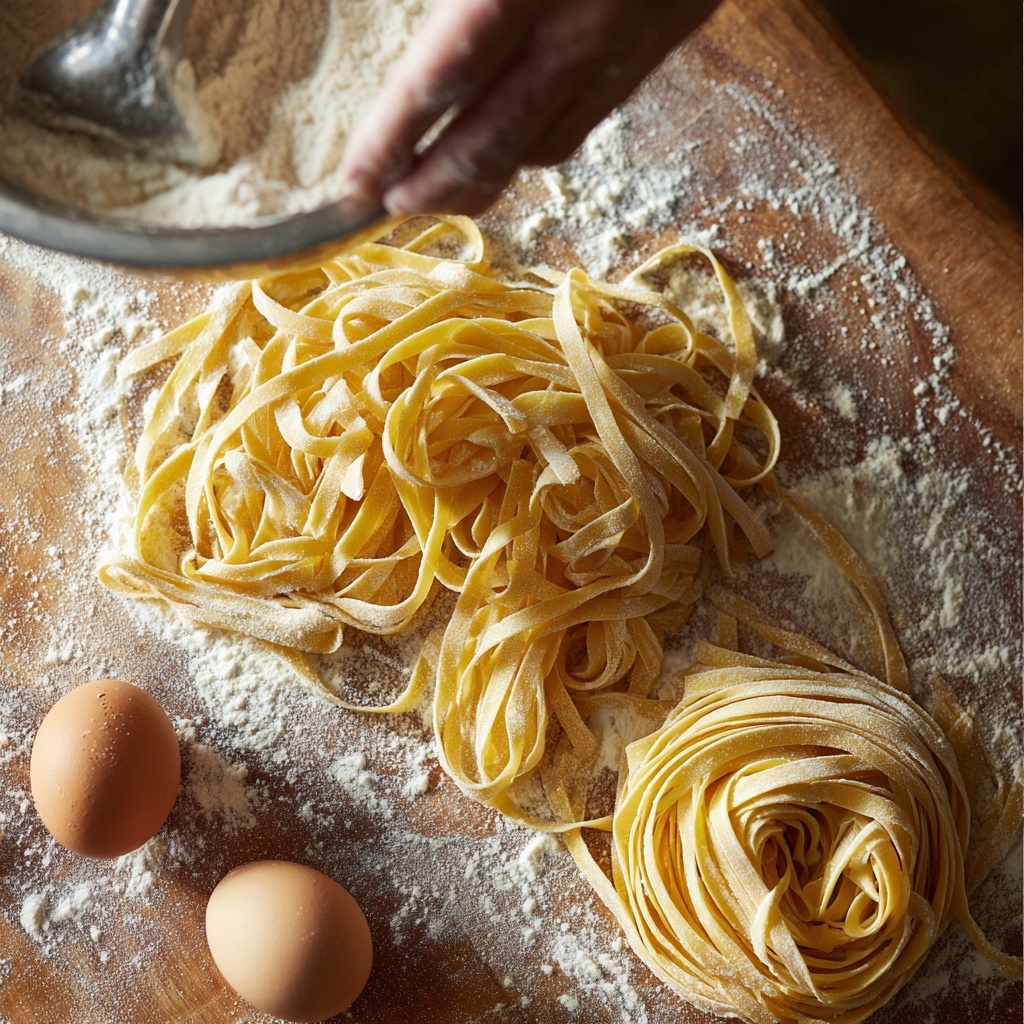
Nothing beats the satisfaction of making your own noodles from scratch, and this Homemade Pasta Recipe is just the perfect way to dive into the joy of fresh, silky pasta right in your own kitchen. With just a handful of simple ingredients, you’ll create tender, flavorful strands that elevate any meal. Whether you’re a kitchen novice or a seasoned cook, this recipe brings the authentic taste and texture of traditional pasta to your table with delightful ease.
Ingredients You’ll Need
Getting started with this Homemade Pasta Recipe is all about keeping it simple but intentional. Each ingredient plays a crucial role, whether it’s building the dough’s structure, adding flavor, or giving the pasta that classic silky texture.
- 2 cups all-purpose flour: The foundation of your dough, providing the necessary gluten to give the pasta its chewy, elastic texture.
- 3 large eggs: These bring richness and moisture, plus help bind the dough together for a smooth finish.
- 1/2 tsp salt: A subtle flavor enhancer that balances the dough without overpowering the delicate taste of fresh pasta.
- 1 tbsp olive oil (optional): Adds a touch of softness and helps the dough stay pliable while rolling, but you can skip it if you prefer a more traditional approach.
How to Make Homemade Pasta Recipe
Step 1: Make the Dough
Begin by creating a mound of flour on a clean surface or large bowl and carefully shape a well in the center. Crack your eggs right into this well, then sprinkle in the salt and drizzle the olive oil if you’re using it. Using a fork, beat the eggs gently, slowly drawing in the flour from the edges. You’ll notice the mixture start to come together into a rough, shaggy dough—that’s exactly what you want here!
Step 2: Knead the Dough
Once your shaggy dough forms, gather it together and start kneading on a lightly floured surface. This might take about 8 to 10 minutes; your patience will pay off as you work toward a smooth, elastic consistency. When the dough feels supple and springs back when poked, wrap it tightly in plastic wrap or cover it with a damp cloth. Let it rest at room temperature for 30 minutes—this waiting time allows the gluten to relax, so rolling out the dough will be much easier.
Step 3: Roll the Dough
Divide the rested dough into four equal portions. You can either roll each piece out with a rolling pin or, if you have one, feed it through a pasta machine for a perfectly even thickness. Aim for your preferred thickness—thinner dough for delicate strands like tagliatelle, or thicker sheets if you plan to use it for lasagna. Once rolled out, cut your dough into your favorite shapes, whether it’s fettuccine, tagliatelle, or wide lasagna ribbons.
Step 4: Cook the Pasta
Bring a large pot of salted water to a rolling boil—this is essential to season your pasta right as it cooks. Drop your fresh pasta into the water and cook it for just 2 to 4 minutes, depending on thickness, until it’s al dente with a bit of bite left to it. Fresh pasta cooks much quicker than dried, so keep an eye on it. Drain your noodles promptly and they’re ready to be tossed with your favorite sauce or toppings.
How to Serve Homemade Pasta Recipe

Garnishes
Fresh pasta is a blank canvas that shines brightest with the right garnishes. Try finishing your dish with freshly grated Parmesan or Pecorino cheese for a salty, nutty layer. A sprinkle of chopped fresh herbs like basil or parsley adds vibrancy and color, while a drizzle of good-quality extra virgin olive oil can enhance the silkiness. Don’t forget a crack of black pepper or a pinch of chili flakes if you love a little heat.
Side Dishes
A simple, crisp green salad with a tangy vinaigrette pairs beautifully with homemade pasta, cutting through the richness of the noodles and sauce. Roasted vegetables like zucchini, bell peppers, or asparagus also make a colorful, wholesome side that rounds out the meal. And if you’re craving comfort, warm crusty bread is perfect for scooping up any leftover sauce and soaking up every last drop.
Creative Ways to Present
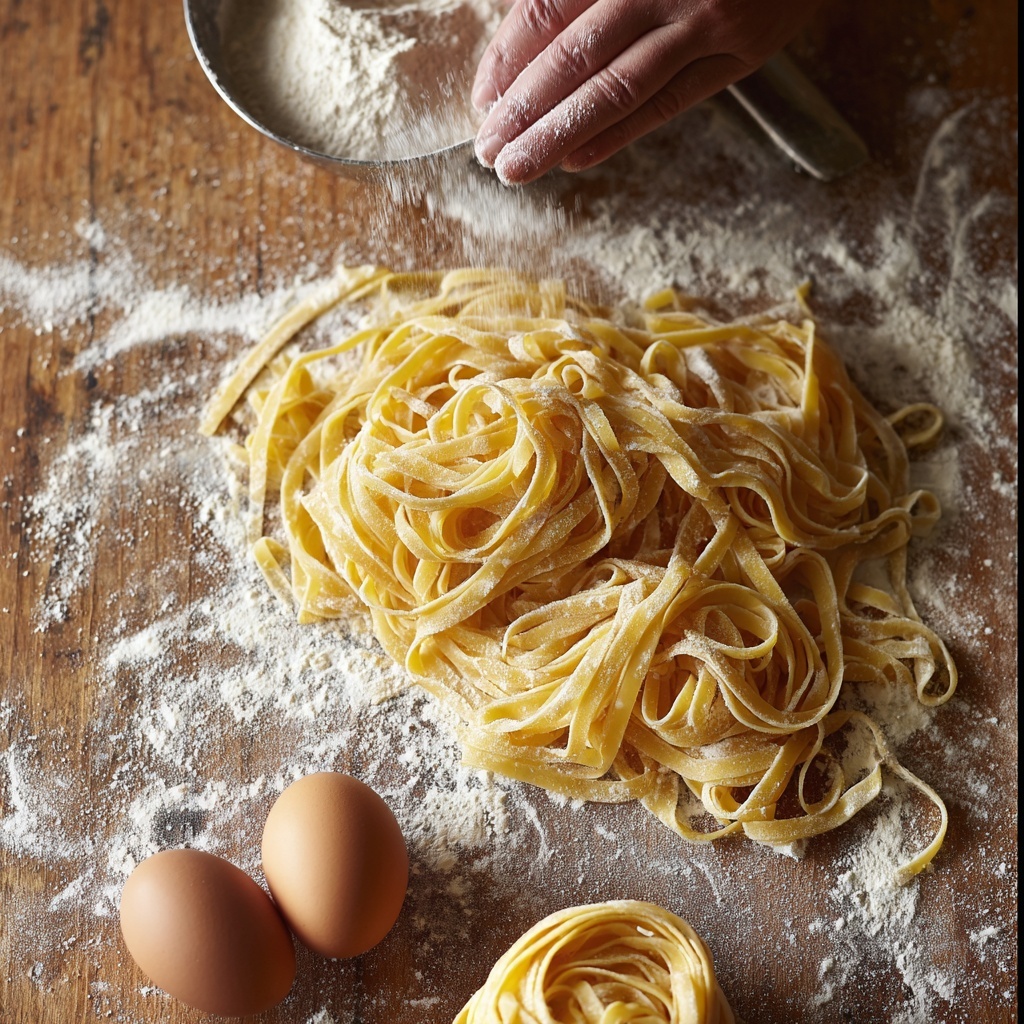
Elevate your homemade pasta experience by shaping your noodles into little nests or bundles for a charming presentation. Serve them twirled around a fork or plated with a swoosh of sauce beneath. For special occasions, layer fresh pasta sheets with fillings and bake for lasagna or rolled dishes like cannelloni. The possibilities are endless, and each method showcases the unique texture you’ve created with your own hands.
Make Ahead and Storage
Storing Leftovers
If you have leftover fresh pasta, it’s best to store it in an airtight container or resealable bag in the refrigerator for up to two days. Lightly dust the noodles with flour to prevent sticking before packing, and you’ll have a quick delicious meal ready to reheat.
Freezing
Fresh pasta freezes incredibly well. Lay the noodles out in a single layer on a baking sheet dusted with flour and freeze until firm, then transfer them to a freezer bag. This way, they won’t stick together. Frozen pasta can last up to two months and cooks slightly longer than fresh, but still far quicker than dried pasta.
Reheating
The best way to reheat cooked fresh pasta is to briefly plunge it into boiling water for 30 to 60 seconds to warm it through and refresh its texture. Avoid microwaving, which can dry it out. Alternatively, toss it directly into a hot sauce in a pan for a flavorful reheat that keeps each strand luscious.
FAQs
Can I use whole wheat flour instead of all-purpose flour in this Homemade Pasta Recipe?
Absolutely! Whole wheat flour adds a nutty flavor and more fiber, though the dough may be slightly denser. You might want to mix whole wheat with all-purpose to keep the texture tender while still benefiting from whole grain goodness.
Is it necessary to rest the dough before rolling?
Yes, resting the dough is key. It relaxes the gluten formed during kneading, making the dough much easier to roll out smoothly without springing back or tearing. It also helps the pasta develop better texture when cooked.
Can I make this pasta without a pasta machine?
Definitely! Rolling by hand with a rolling pin works just fine—just make sure to roll the dough out as evenly as possible and dust lightly with flour to prevent sticking. It’s a great way to connect with the pasta-making tradition.
How long does fresh homemade pasta take to cook?
Fresh pasta cooks very quickly, usually between 2 to 4 minutes. The exact timing depends on thickness and shape, but once the noodles float and are tender yet firm to the bite (al dente), they’re ready to drain and serve.
Can I add flavorings like herbs or spinach to the dough?
Yes, you can incorporate finely chopped fresh herbs or pureed vegetables like spinach into the dough for extra color and flavor. Just be sure to adjust the flour slightly if adding wet ingredients to maintain the right dough consistency.
Final Thoughts
There’s nothing quite like the pride and deliciousness of crafting pasta from scratch, and this Homemade Pasta Recipe makes that dream wonderfully accessible. Once you get the hang of it, you’ll find endless joy in customizing shapes, sauces, and presentations. So grab your ingredients, roll up your sleeves, and treat yourself and your loved ones to a truly special meal made with heart and tradition!
Print
Homemade Pasta Recipe
- Prep Time: 15 minutes
- Cook Time: 4 minutes
- Total Time: 54 minutes
- Yield: 4 servings
- Category: Main Course
- Method: Stovetop
- Cuisine: Italian
Description
This homemade pasta recipe guides you through making fresh, delicious pasta from scratch using simple ingredients like flour and eggs. The process involves making and kneading the dough, rolling it out to your desired thickness, cutting into shapes, and cooking it quickly in boiling water for a perfect al dente texture. Ideal for serving with your favorite sauces, this classic dish elevates any meal with fresh pasta quality.
Ingredients
Dry Ingredients
- 2 cups all-purpose flour (plus extra for dusting)
- 1/2 tsp salt
Wet Ingredients
- 3 large eggs
- 1 tbsp olive oil (optional)
Instructions
- Make the Dough: On a clean surface or in a large bowl, mound the flour and create a well in the center. Crack the eggs into the well, add the salt and olive oil if using, then beat the eggs with a fork, gradually incorporating the surrounding flour until a shaggy dough forms.
- Knead the Dough: Gather the dough and knead it on a lightly floured surface for 8 to 10 minutes until it becomes smooth and elastic. Wrap the dough in plastic wrap or cover with a damp cloth and let it rest for 30 minutes at room temperature.
- Roll the Dough: Divide the rested dough into four equal portions. Roll out each portion on a floured surface or use a pasta machine to reach your desired thickness. Then cut the dough into your preferred shapes such as fettuccine, tagliatelle, or lasagna sheets.
- Cook the Pasta: Bring a large pot of salted water to a rolling boil. Add the fresh pasta and cook for 2 to 4 minutes, or until it is al dente. Drain the pasta and serve immediately with your favorite sauce.
Notes
- Resting the dough is crucial to relax the gluten, making it easier to roll out.
- Use plenty of flour when rolling and cutting to prevent sticking.
- Fresh pasta cooks much faster than dried pasta, so keep an eye on it to avoid overcooking.
- Store leftover fresh pasta in the refrigerator for up to 2 days or freeze for longer storage.