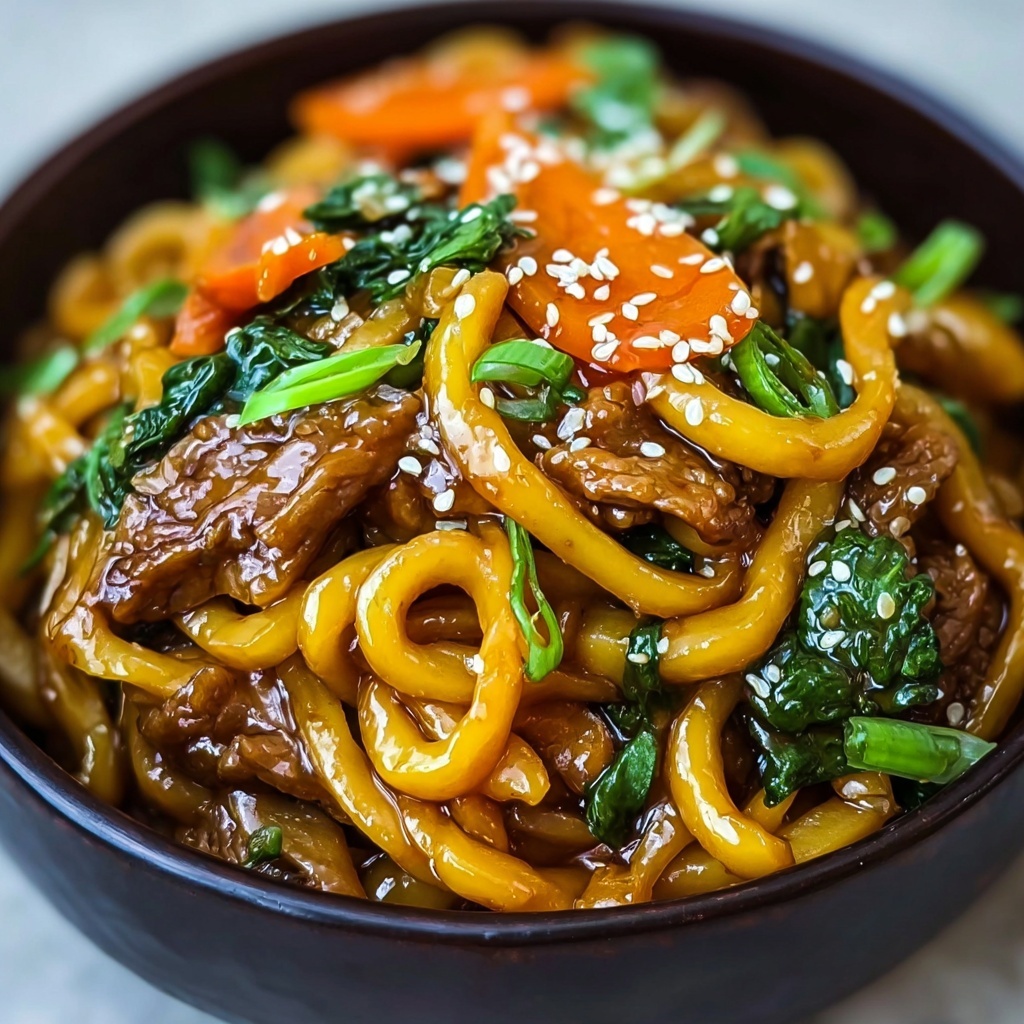
There is something incredibly comforting and satisfying about slurping a warm bowl of stir-fried noodles, and this Yaki Udon Noodle Recipe delivers exactly that with every bite. Combining chewy udon noodles, tender chicken, and vibrant veggies all coated in a savory soy-based sauce, this dish brings together a harmony of flavors and textures that will brighten up any weeknight dinner. Whether you’re a noodle lover or new to Japanese cuisine, this recipe is a delightful way to enjoy a restaurant-quality meal right at home, with easy-to-find ingredients and a straightforward cooking process that anyone can follow.
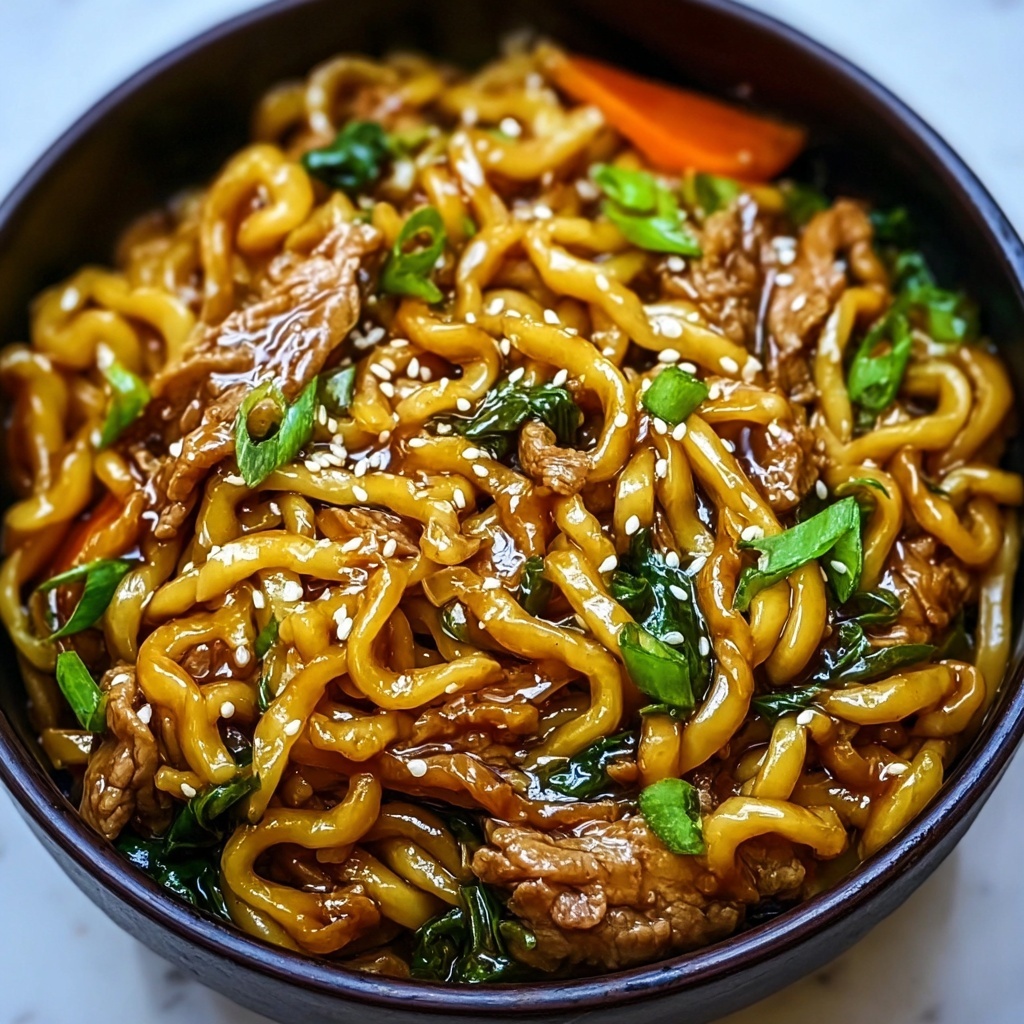
Ingredients You’ll Need
These ingredients are simple yet essential, each adding a unique layer of flavor, texture, or color that makes the Yaki Udon Noodle Recipe so irresistible. From the thick and chewy udon noodles to the fresh crunch of bell peppers and carrots, every component plays a vital role in the dish’s success.
- 8 oz udon noodles: Thick Japanese noodles that create the perfect chewy base for the stir-fry.
- 1 tbsp sesame oil (divided): Adds a subtle nuttiness and helps to develop that beautiful stir-fry aroma.
- 1 cup boneless chicken breast (sliced): Provides lean protein and soaks up the sauce wonderfully.
- 1 cup bell peppers (sliced): Brings sweet crunch and vibrant color to balance the dish.
- 1 cup carrots (julienne): Adds a touch of earthiness and freshness with a nice crisp bite.
- 2 green onions (chopped): Offers a sharp, mild onion flavor as a final bright garnish.
- 3 tbsp low-sodium soy sauce: The salty-savory backbone that dresses the noodles and ties all the ingredients together.
- 1/2 cup vegetable broth: Infuses moisture and depth to the stir-fry without overpowering flavors.
- 2 garlic cloves (minced): Provides a punch of aromatic warmth just before serving.
How to Make Yaki Udon Noodle Recipe
Step 1: Prepare the udon noodles
First things first, cook your udon noodles according to the package instructions. Since udon noodles are often sold pre-cooked and frozen or fresh, the process is quick and easy. Once done, drain the noodles well and set them aside so they’re ready to be tossed into the pan later. This step ensures your noodles have the ideal texture—soft but pleasantly chewy—perfect for soaking up all the delicious sauce.
Step 2: Cook the chicken to perfection
Heat half of your sesame oil in a skillet over medium-high heat. Add the sliced chicken breast and cook it until it’s beautifully browned on the outside and cooked through inside, which takes about 5-7 minutes. Remove the chicken from the skillet to keep it warm while you cook the veggies. This step locks in the chicken’s juices and gives it a lovely caramelized flavor.
Step 3: Stir-fry the vibrant vegetables
In the same skillet, add more sesame oil if needed, then toss in the sliced bell peppers and julienned carrots. Stir-fry these colorful veggies for about 3-4 minutes until they’re tender yet still maintain a satisfying crunch. This bit of texture contrast is what makes this dish so exciting to eat, and the natural sweetness from the peppers and carrots really energizes the whole dish visually and taste-wise.
Step 4: Combine chicken, noodles, and sauce
Return the cooked chicken to the skillet with the vegetables. Add the cooked udon noodles along with the low-sodium soy sauce and vegetable broth. Stir everything together gently but thoroughly so that each noodle is coated with the flavorful sauce and all ingredients are evenly mixed. Keep cooking and stirring until the whole mixture is heated through, allowing the flavors to meld beautifully.
Step 5: Add garlic and finish the dish
During the last minute of cooking, stir in the minced garlic to release its aromatic goodness without burning it. Garlic adds a warm, inviting depth that elevates the entire dish. After that final stir, remove the skillet from heat and sprinkle the chopped green onions over the top for a fresh and slightly pungent garnish. Then, it’s ready to serve hot!
How to Serve Yaki Udon Noodle Recipe
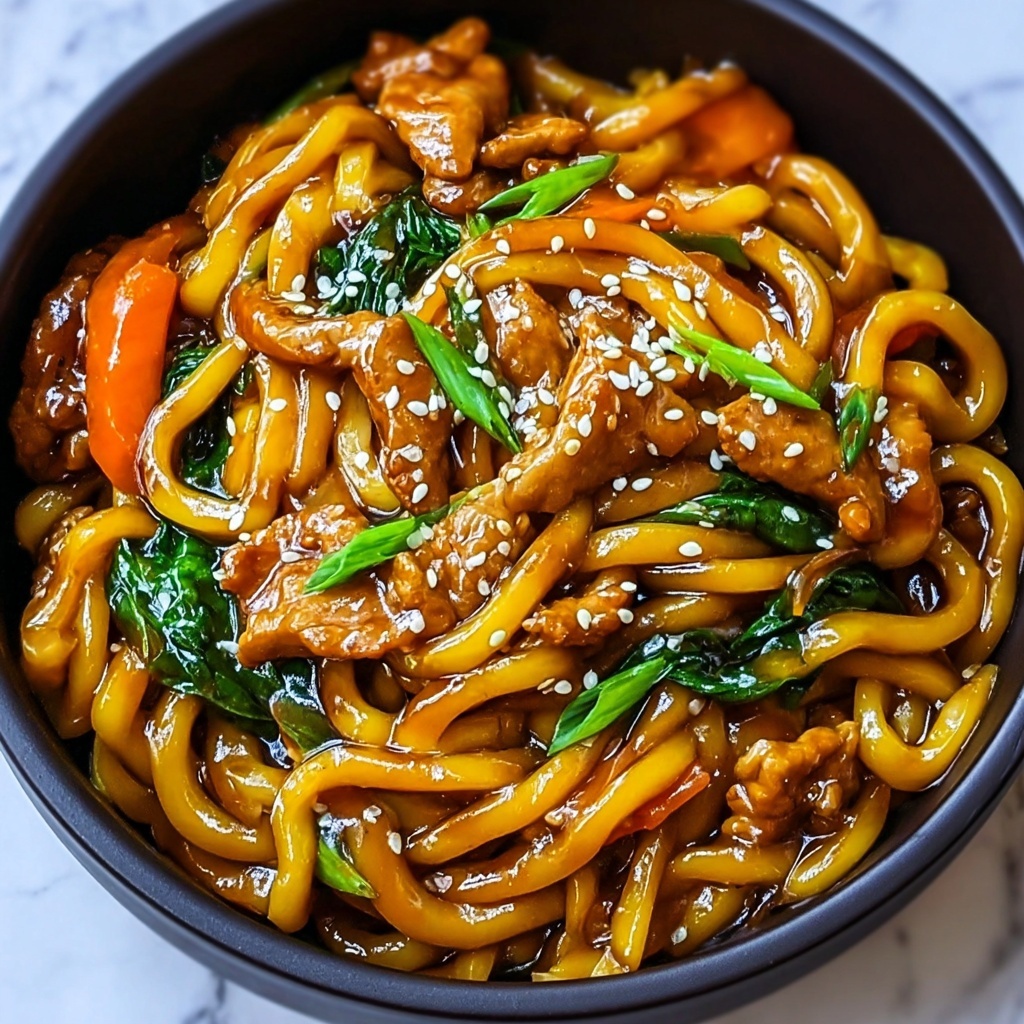
Garnishes
Green onions are the classic garnish here, lending a pop of color and a mild onion taste that brightens the rich stir-fry. Feel free to add a sprinkle of toasted sesame seeds for a subtle crunch or a drizzle of spicy mayo if you like a bit of heat. Fresh herbs like cilantro or shiso can also be fun, adding an unexpected twist.
Side Dishes
Yaki Udon pairs wonderfully with light, complementary sides. A crisp simple cucumber salad or a steamed side of edamame works beautifully to balance the meal. For something heartier, miso soup is always a comforting partner that keeps the meal authentically Japanese.
Creative Ways to Present
Serve this dish in wide shallow bowls to showcase the colors and textures. For a fun presentation, you might even pile it high on a platter and let everyone serve themselves family-style. Wrapping some of the noodles and chicken in lettuce leaves can offer a low-carb, fresh option that’s just as delicious!
Make Ahead and Storage
Storing Leftovers
If you have leftovers, transfer them to an airtight container and refrigerate promptly. The Yaki Udon Noodle Recipe keeps well for up to 3 days, making it perfect for meal prep or a quick dinner the next day. However, noodles might soak up the sauce, so keep that in mind.
Freezing
While possible, freezing this noodle dish is not ideal because the texture of udon noodles and vegetables can become mushy after thawing. If you want to freeze it, separate the noodles from the veggies and chicken beforehand to preserve texture better.
Reheating
To reheat, gently warm the stir-fry in a skillet over medium heat until the noodles and chicken are heated through, adding a splash of water or broth if it looks dry. Avoid microwaving if you want to keep the best texture and flavor.
FAQs
Can I use a different protein than chicken?
Absolutely! This Yaki Udon Noodle Recipe is versatile — you can swap chicken for shrimp, beef strips, tofu, or even keep it vegetarian by adding more veggies. Each option delivers a slightly different but equally delicious take on the dish.
What if I can’t find udon noodles?
If udon noodles aren’t available, thick rice noodles or even fresh egg noodles can work as substitutes. Just keep in mind the texture will differ slightly since udon is thick and chewy by nature.
How spicy is this dish?
This version is mild, letting the natural flavors of the chicken and veggies shine. If you like spice, you can easily add chili flakes, sliced fresh chili, or a splash of Sriracha to customize the heat level.
Is low-sodium soy sauce necessary?
Using low-sodium soy sauce helps control saltiness, but if you only have regular soy sauce, just reduce the amount slightly and taste as you go. The goal is a balanced, savory sauce rather than an overly salty one.
Can I prepare this recipe gluten-free?
Yes! Use gluten-free tamari in place of soy sauce and check that your udon noodles are gluten-free (some brands offer gluten-free versions). This way, you can still enjoy this delightful dish without gluten concerns.
Final Thoughts
There is truly no better way to treat yourself to a wholesome, flavorful, and quick meal than making this Yaki Udon Noodle Recipe at home. It’s charmingly simple yet packed with personality — a dish that warmly invites everyone to gather around the table and enjoy. Don’t hesitate to try it out and make it your own; once you do, it might just become your favorite go-to noodle recipe too!
Print
Yaki Udon Noodle Recipe
- Prep Time: 10 minutes
- Cook Time: 20 minutes
- Total Time: 30 minutes
- Yield: 4 servings
- Category: Main Course
- Method: Stovetop
- Cuisine: Japanese
- Diet: Low Fat
Description
This Yaki Udon Noodle recipe is a quick and flavorful Japanese stir-fry dish featuring tender udon noodles, juicy chicken breast, and crunchy vegetables tossed in a savory soy sauce and garlic-infused sesame oil. Perfect for a satisfying weeknight dinner, this recipe delivers a balanced meal with vibrant colors and bold flavors in just 30 minutes.
Ingredients
Main Ingredients
- 8 oz udon noodles
- 1 tbsp sesame oil (divided)
- 1 cup boneless chicken breast (sliced)
- 1 cup bell peppers (sliced)
- 1 cup carrots (julienne)
- 2 green onions (chopped)
- 3 tbsp low-sodium soy sauce
- 1/2 cup vegetable broth
- 2 garlic cloves (minced)
Instructions
- Cook Noodles: Prepare the udon noodles as per package instructions until al dente. Drain well and set aside to prevent sticking.
- Cook Chicken: Heat half a tablespoon of sesame oil in a skillet over medium-high heat. Add sliced chicken breast and cook for 5-7 minutes until browned and fully cooked through. Remove the chicken from the skillet and set aside.
- Stir-Fry Vegetables: In the same skillet, add the remaining sesame oil if necessary. Toss in the sliced bell peppers and julienned carrots, stir-frying them for 3-4 minutes until they are tender but still retain some crunch.
- Combine Ingredients: Return the cooked chicken to the skillet with the vegetables. Add the cooked udon noodles, low-sodium soy sauce, and vegetable broth. Stir everything together thoroughly and heat through for a few minutes.
- Add Garlic and Finish: Stir in the minced garlic during the last minute of cooking to release its aroma without burning. Remove from heat, garnish with chopped green onions, and serve the Yaki Udon hot for the best flavor.
Notes
- If you prefer a vegetarian version, substitute chicken with tofu or additional vegetables.
- Use low-sodium soy sauce to keep the sodium content moderate.
- Udon noodles can be fresh or frozen; adjust cooking time accordingly.
- You can add a splash of sesame seeds or chili flakes for garnish and extra flavor.
- Make sure not to overcook the vegetables to maintain their texture and nutrients.